

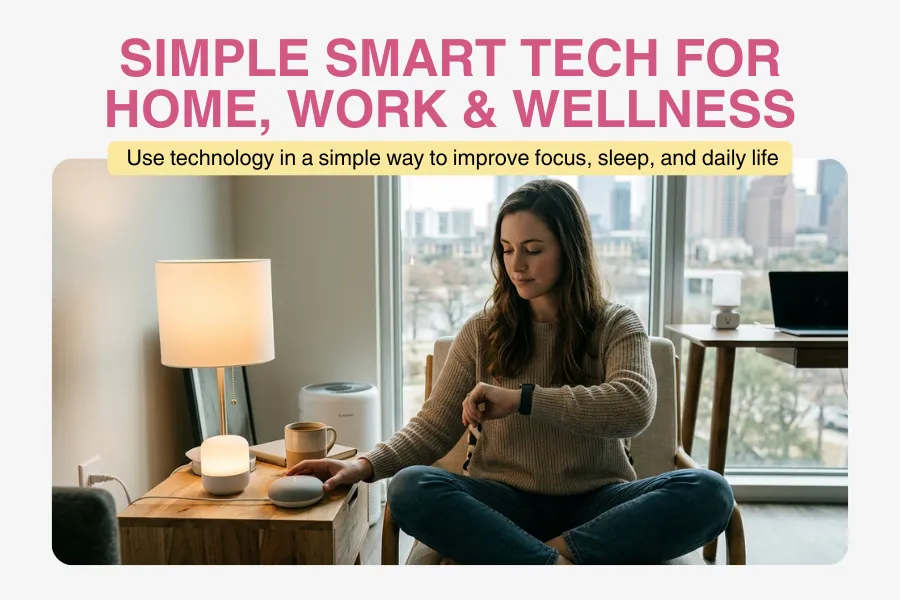
In today’s fast-moving world, simple smart tech for home work and wellness is not about filling your life with gadgets. It is about using the right tools in the simplest way possible to make everyday living smoother, calmer, and more intentional.
Smart tech, in everyday terms, refers to tools, apps, and devices that automate small tasks, reduce manual effort, and help you stay organized. But for many people, especially those living in busy and dynamic cities like Austin, technology often becomes overwhelming instead of helpful.
This guide is designed as an Austin friendly smart tech guide, focused on principles instead of pushing products. It is for people who want to use smart tech without overcomplicating life, while still improving focus, comfort, and overall well-being.
By the end, you’ll know how to choose just a few smart tools that actually help you feel calmer, more focused, and more in control.
Why Simple Smart Tech Matters
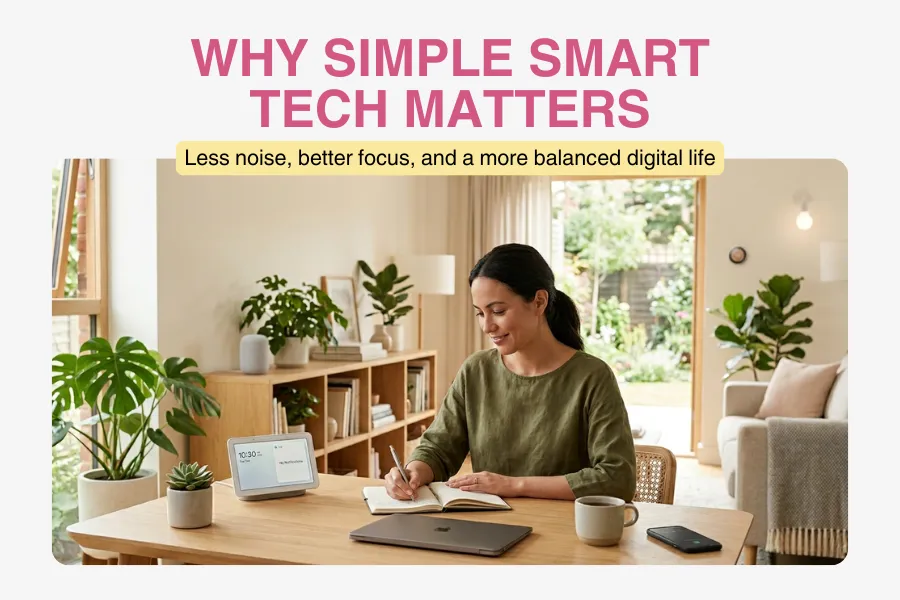
The modern lifestyle is filled with constant notifications, endless apps, and an always-on work culture that makes it difficult to truly disconnect. While technology is designed to make life easier, overusing it often leads to the opposite effect. Instead of feeling productive, many people experience mental fatigue, distraction, and a constant sense of being behind.
This is where simple smart tech for home work and wellness becomes important. It shifts the focus from using more tools to using the right tools in the right way. When technology is simplified and used intentionally, it stops being overwhelming and starts becoming supportive. The goal is not to stay connected all the time, but to create a system where technology works quietly in the background while you stay in control of your time and energy.
The Problem with Too Much Technology
Adding more devices or apps does not automatically improve your life. In fact, it often increases complexity and reduces clarity.
Many people fall into the trap of downloading multiple productivity apps, setting up various tools, and constantly switching between them. This creates decision fatigue, where even small choices like which app to use or which notification to respond to become mentally draining.
Too much technology can also lead to:
- Constant interruptions from notifications across multiple devices
- Reduced attention span due to frequent context switching
- Increased stress from trying to keep up with everything
- Difficulty in maintaining boundaries between work and personal life
Instead of simplifying routines, excessive tech usage creates clutter, both digitally and mentally. This is why learning to use smart tech without overcomplicating life is essential for long-term productivity and well-being.
Benefits of Using Smart Tech Simply
When you approach technology with intention, even a few tools can create a powerful impact. Using simple smart tech for home work and wellness in a focused way allows you to design a lifestyle that feels more balanced and manageable.
Some key benefits include:
-
Improved Sleep Quality
By reducing late-night screen exposure and using tools like dim lighting or scheduled device downtime, your body can follow a more natural sleep rhythm. This leads to better rest and improved energy levels throughout the day.
-
Better Focus and Productivity
Limiting distractions during work hours helps you stay fully engaged in tasks. Simple tools like focus timers or notification blockers allow you to complete work faster and with higher quality.
-
A More Relaxing Home Environment
Smart lighting, controlled noise levels, and minimal automation can transform your home into a calm and comfortable space. Instead of reacting to your environment, you start shaping it to support your mood and routine.
-
Reduced Mental Load
When small decisions are automated or simplified, your mind has more space to focus on meaningful tasks. This reduces stress and improves overall clarity.
The key idea is not to use more technology, but to use it more effectively.
Austin Lifestyle Connection
In fast-paced cities like Austin, balancing work, personal life, and wellness can be challenging. Long work-from-home hours, high temperatures, and busy daily schedules make it important to create systems that support comfort and focus without adding extra effort.
Using an Austin friendly smart tech guide approach, simple solutions can make a big difference:
- Quiet-time tools can help maintain focus during busy or noisy hours
- Smart lighting can make indoor spaces feel more comfortable during long, hot afternoons
- Basic automation can reduce small daily tasks, freeing up time for relaxation or outdoor activities
Austin’s lifestyle blends productivity, creativity, and wellness. By using simple smart tech for home work and wellness, you can create a routine that supports all three without feeling overwhelmed.
Define Your Goals (Home, Work, Wellness)
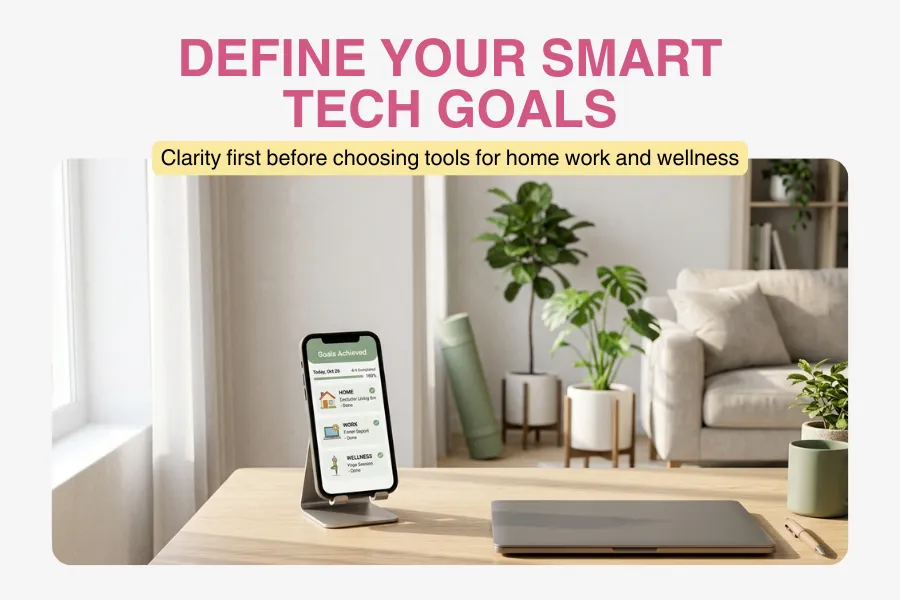
Before choosing any tools or devices, clarity matters far more than features. Many people jump straight into buying or downloading the latest tech, only to realize later that it does not actually solve their problem.
The foundation of using simple smart tech for home work and wellness is understanding what you truly need. When your goals are clear, it becomes much easier to select tools that support your lifestyle instead of complicating it. Without this step, even the best technology can feel unnecessary or overwhelming.
Taking a few minutes to define your priorities helps you avoid wasted time, money, and mental energy.
Questions to Ask Yourself
To build a system that actually works for you, start by reflecting on three key areas of your life:
-
At home, what do I want to feel?
Do you want your space to feel calm, organized, and relaxing after a long day? Or do you want it to feel more efficient and easy to manage? Your answer will guide whether you focus on lighting, automation, or reducing noise and clutter.
-
At work, what do I struggle with?
Think about your biggest challenges. Is it staying focused, dealing with constant distractions, or working longer hours than planned? Identifying this helps you choose the right tech tools for remote workers and creators that directly improve productivity.
-
In wellness, what do I want to improve?
This could include better sleep, reduced stress, or more consistent movement throughout the day. Your wellness goal will determine whether you need simple reminders, habit apps, or basic tracking tools.
These questions bring clarity and ensure your simple smart tech for home work and wellness setup is built around real needs, not trends.
Focus on 1–2 Goals Only
One of the biggest mistakes people make is trying to improve everything at once. While it may feel productive in the beginning, it quickly becomes overwhelming and difficult to maintain.
A focused approach works better.
Choose one or two main goals and build around them. For example:
- If your focus is productivity, prioritize tools that improve concentration
- If your focus is relaxation, prioritize tools that improve your home environment
By narrowing your focus, you make it easier to stay consistent and actually see results. This is the core principle behind simple smart tech for home work and wellness.
Example Goal
Let’s say your main goal is better sleep.
You do not need multiple devices, complex systems, or constant tracking. Instead, a simple setup can be far more effective:
- A smart light that dims automatically in the evening
- A consistent alarm that supports your sleep schedule
- A basic habit reminder to wind down at night
Combined with small behavioral changes, these tools can significantly improve your sleep quality.
This example highlights an important idea. Real improvement does not come from using more technology, but from using the right technology in a simple and consistent way.
That is how simple smart tech for home work and wellness creates meaningful, long-term results.
Smart Tech for the Home (Simplified)
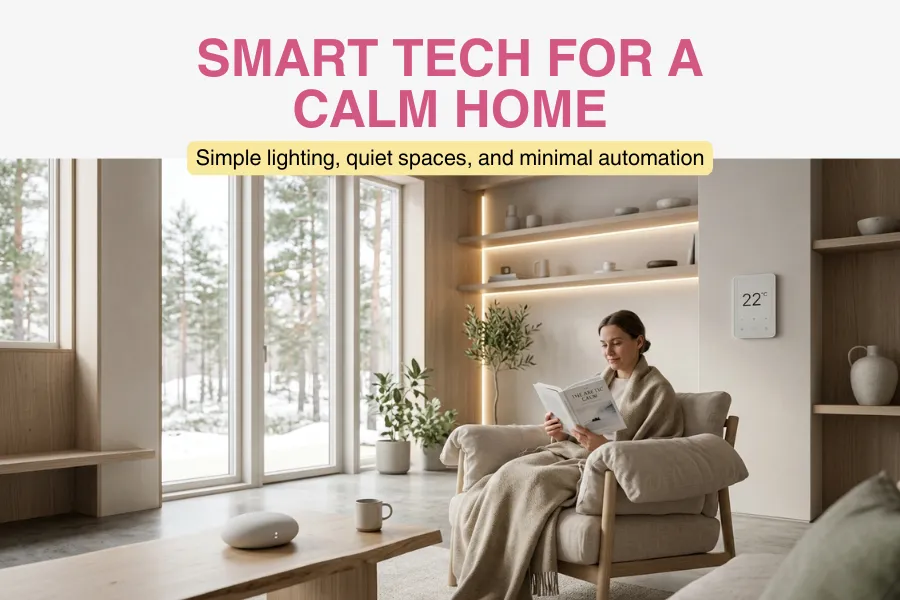
Creating a comfortable and functional home environment does not require complex systems or multiple devices. The goal of simple smart tech for home work and wellness is to make your space work for you in a subtle and supportive way.
Instead of trying to automate everything, focus on small improvements that enhance your daily routine. Even one or two smart adjustments can make your home feel more calming, efficient, and easier to manage.
Lighting and Ambience
Lighting plays a powerful role in how you feel throughout the day. Bright, harsh lighting can increase stress and fatigue, while softer, warmer lighting can help you relax and unwind.
By adjusting your lighting with simple smart tools, you can create a natural rhythm in your home that supports both productivity and relaxation.
How Smart Lighting Helps
Smart lighting allows you to control your environment without extra effort. Some practical benefits include:
- Lights that automatically dim in the evening, helping your body prepare for rest
- Gradual changes in brightness that reduce eye strain after long screen time
- A more calming atmosphere that supports relaxation after a busy day
These small adjustments can significantly improve how your home feels, especially when trying to build better routines around sleep and downtime.
Keep It Minimal
You do not need to install smart lighting in every room. In fact, doing so can make things unnecessarily complicated.
Start with one or two key areas, such as:
- Your bedroom for better sleep routines
- Your living room for evening relaxation
This approach keeps your simple smart tech for home work and wellness setup easy to manage while still delivering noticeable results.
Noise and Quiet Zones
Noise is one of the most common distractions at home, especially for people working remotely. Constant background sounds, notifications, or interruptions can increase stress and reduce your ability to focus.
Creating controlled sound environments helps you feel more in control of your space.
Simple Solutions
You do not need expensive setups to manage noise effectively. Simple tools can make a big difference:
- Noise reduction or ambient sound apps to block distractions
- White noise or nature sound apps to create a calming background
- Notification control settings to reduce digital interruptions
These solutions are especially useful as tech tools for remote workers and creators who need consistent focus throughout the day.
Practical Rule
The goal is not complete silence, but fewer disruptions.
Instead of trying to eliminate all noise, focus on creating a balance where:
- Important sounds are still noticeable
- Unnecessary interruptions are minimized
This makes your environment more productive without feeling unnatural or restrictive.
Basic Home Automation (No Overkill)
Automation should simplify your life, not complicate it. The best systems are the ones you barely notice because they work seamlessly in the background.
With minimal smart home automation tips, you can automate small tasks that save time and reduce daily effort.
Simple Automation Examples
- A plug timer that prepares your coffee before you wake up
- Remote control for lights so you can turn them off after leaving home
- Scheduled routines for lights or devices based on your daily habits
These are small changes, but they remove repetitive tasks from your day.
Core Principle
Always ask yourself: does this automation reduce effort or add complexity?
If it simplifies your routine, it is worth keeping. If it requires constant adjustment or attention, it goes against the purpose of simple smart tech for home work and wellness.
Smart Tech for Work and Focus
Work environments today are filled with distractions, especially for remote workers. Notifications, multitasking, and unclear boundaries can reduce productivity and increase stress.
Using simple smart tech for home work and wellness, you can create a structured work environment that supports deep focus and better time management without adding pressure.
Focus Support Tools
Staying focused for extended periods has become increasingly difficult. Smart tools can help you regain control over your attention and work more efficiently.
Effective Tools
Some of the most useful tools include:
- Focus timers that break work into structured intervals
- Distraction-blocking apps that limit access to non-essential websites
- Browser extensions that reduce digital clutter
These tools are simple but highly effective when used consistently.
How to Use Them
Instead of using them all day, start with one focused session:
- Set a 60 to 90 minute deep work block
- Turn off notifications during this time
- Commit to completing one important task
This approach helps you build a sustainable focus habit using tech tools for remote workers and creators.
Digital Boundaries
Without clear boundaries, work can easily take over your entire day. Technology should help you manage your time, not control it.
Creating digital boundaries is essential for maintaining productivity and mental clarity.
Rules to Follow
Simple rules can make a big difference:
- Set no-notification time blocks during focused work
- Check emails only at specific times instead of constantly
- Use calendar blocks to protect important tasks
These habits reduce distractions and improve overall efficiency.
Automation Tip
Smart calendars can automatically block time for focus sessions or no-meeting periods.
By automating these boundaries, you remove the need to constantly manage your schedule, making your workflow smoother and more predictable.
Protecting Work-Life Balance
One of the biggest challenges of modern work is the lack of separation between professional and personal life. Without clear boundaries, work can extend into evenings and weekends.
Using simple smart tech for home work and wellness, you can create systems that protect your personal time.
Practical Steps
- Use separate devices for work and personal use when possible
- Set fixed offline hours to disconnect from work
- Use status indicators like “busy” or “in focus” to reduce interruptions
These steps help create a clear distinction between work time and personal time.
Why It Matters
Maintaining this balance is essential for long-term digital wellness with technology.
When your tools support your boundaries instead of breaking them, you feel more in control, less stressed, and better able to sustain productivity over time.
Smart Tech for Wellness (Sleep, Movement, Stress)
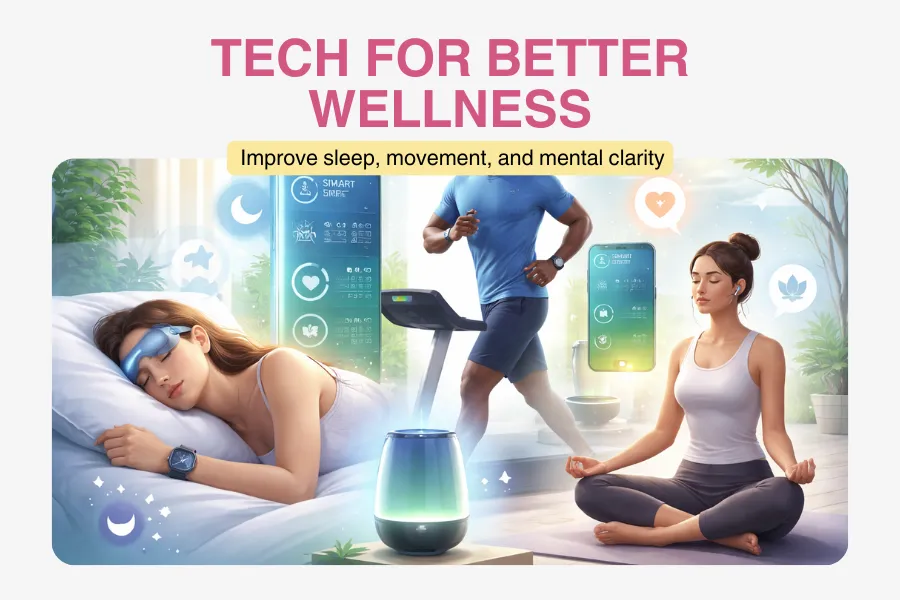
Wellness is one of the most valuable areas where technology can make a real difference, but only when used with the right approach. The purpose of simple smart tech for home work and wellness is not to track everything constantly, but to gently support healthier routines in your daily life.
Many people make the mistake of overusing wellness tech, checking data repeatedly and trying to optimize every detail. This often leads to stress instead of improvement. A better approach is to use technology as a guide, not a controller.
When used correctly, smart tech can help you sleep better, move more consistently, and manage stress without adding pressure.
Wearables and Health Tracking
Wearables and health-tracking devices have become popular for monitoring daily habits, but their real value lies in long-term insights, not moment-to-moment data.
These tools are most effective when they help you notice patterns rather than chase perfection.
Use Data Wisely
The key to using wearables effectively is to focus on trends, not individual numbers.
For example:
- Instead of worrying about one poor night of sleep, look at your weekly sleep pattern
- Instead of stressing over daily step counts, track your overall activity consistency
- Instead of reacting instantly to stress signals, observe when and why they occur
This approach reduces anxiety and aligns with the idea of smart tech for better sleep and focus, where the goal is awareness, not pressure.
What to Monitor
To keep things simple, focus only on a few meaningful indicators:
- Sleep patterns to understand your rest and recovery
- Activity levels to ensure consistent movement throughout the day
- Stress signals to identify triggers and improve balance
Tracking too many metrics can become overwhelming, so keeping it minimal is essential for maintaining digital wellness with technology.
App-Based Habits
Apps can be powerful tools for building routines, but only when used intentionally. The goal is to create consistency, not dependency.
Using the right apps as part of your simple smart tech for home work and wellness system can help reinforce small daily habits that lead to long-term results.
Helpful App Types
Some of the most effective types of apps include:
- Journaling apps to reflect on your day and clear your mind
- Meditation tools to reduce stress and improve focus
- Habit trackers to build routines like walking, reading, or sleeping on time
These tools work best when they are simple, easy to use, and aligned with your personal goals.
Usage Rule
One important rule is to avoid overchecking.
Instead of opening these apps multiple times a day:
- Check in once daily
- Update your progress quickly
- Move on with your routine
This keeps the experience supportive rather than distracting, helping you use smart tech without overcomplicating life.
Supporting Real-World Habits
Technology should enhance your real-world habits, not replace them. The goal is to create gentle reminders and supportive systems that encourage consistency.
When used correctly, smart tools can act as subtle nudges that keep you on track without requiring constant attention.
Examples
- Smart alarms that wake you up at a consistent time, helping regulate your sleep cycle
- Movement reminders that prompt you to stretch or walk after long sitting periods
- Hydration alerts that remind you to drink water throughout the day
These simple tools make it easier to maintain healthy habits, especially during busy schedules.
Key Insight
Technology works best when it stays in the background.
It should support your habits, not replace your awareness or discipline. When you rely too much on tools, you risk losing the natural rhythm of your routines.
The true value of simple smart tech for home work and wellness lies in its ability to guide you gently, helping you build habits that last even without the technology itself.
How to Avoid Tech Overload
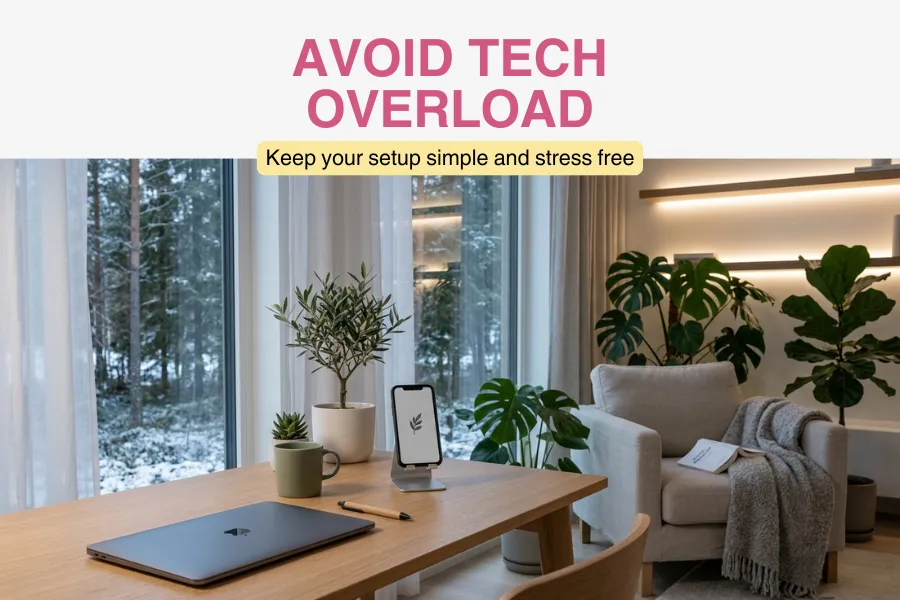
While technology is meant to simplify life, it can quickly become overwhelming if not managed properly. Too many apps, devices, and notifications can create mental clutter instead of reducing it.
The key to using simple smart tech for home work and wellness is not adding more tools, but learning how to limit and control them. A simplified approach helps you stay focused, reduces stress, and ensures that technology supports your lifestyle instead of dominating it.
By following a few practical rules, you can avoid tech overload and build a system that feels calm, efficient, and sustainable.
Rule 1 Start Small
One of the biggest mistakes people make is trying to adopt multiple tools at once. While it may feel productive initially, it often leads to confusion and inconsistency.
Start with just one or two tools that directly support your main goal.
For example:
- One tool for focus
- One tool for sleep or wellness
This approach allows you to understand how each tool fits into your routine without feeling overwhelmed. It also makes it easier to stay consistent, which is essential for long-term results.
Starting small is the foundation of simple smart tech for home work and wellness, because simplicity always leads to better adoption.
Rule 2 Make It Invisible
The best technology is the kind you barely notice. If a tool constantly demands your attention, it becomes a distraction rather than a solution.
Good Automation Feels Natural
Effective automation works quietly in the background.
For example:
- Lights adjusting automatically without manual control
- Notifications being filtered without constant checking
- Scheduled routines running without reminders
When automation feels natural, it reduces effort instead of adding to it. This is a key principle when you want to use smart tech without overcomplicating life.
If a tool requires frequent interaction or constant monitoring, it may not be the right fit for a simplified system.
Rule 3 One-Year Test
Not every tool will work for you, and that is completely normal. What matters is regularly evaluating whether a tool is actually improving your life.
Evaluate Regularly
Give each tool enough time to show results, but do not keep it forever if it does not add value.
Ask yourself:
- Has this tool saved me time?
- Has it reduced stress or improved focus?
- Do I still use it consistently?
If the answer is no after 6 to 12 months, it is better to remove it.
This keeps your simple smart tech for home work and wellness setup clean, effective, and aligned with your needs.
Rule 4 Protect Quiet Time
In a world filled with constant connectivity, quiet time has become essential for mental clarity and recovery. Without it, even the best tools cannot prevent burnout.
Create Low-Tech Zones
Designating certain areas or times as low-tech zones helps create balance in your routine.
Examples include:
-
Bedroom
Keep this space free from unnecessary devices to support better sleep and relaxation
-
Dining table
Avoid screens during meals to improve presence and connection
-
Morning routine
Avoid screens during meals to improve presence and connection
These boundaries are a crucial part of digital wellness with technology, ensuring that your mind has time to reset.
By following these simple rules, you can maintain control over your technology instead of letting it control you. This is what makes simple smart tech for home work and wellness truly effective in the long run.
Building Your Personal Smart Tech Stack
Once you understand your goals and the role of technology in your daily life, the next step is to build a system that works specifically for you. This is your personal setup or “smart tech stack.”
The idea behind simple smart tech for home work and wellness is not to copy what others are using, but to create a small, intentional combination of tools that fit naturally into your routine. A well-designed stack should feel easy to use, require minimal effort, and quietly support your lifestyle without adding extra decisions.
Instead of thinking in terms of multiple apps and devices, think in terms of outcomes. What do you want your system to help you achieve every day?
Goal-First Checklist
Before selecting any tools, it helps to follow a simple checklist that keeps your setup focused and effective.
-
What is my goal?
Start by identifying your primary focus. This could be better sleep, improved productivity, reduced stress, or a more organized home environment. Being specific helps you avoid unnecessary tools.
-
Which tools match that goal?
Choose one or two tools that directly support your objective. For example, if your goal is focus, you might select a timer and a distraction blocker. Avoid adding tools that do not clearly contribute to your main goal.
-
How will I use them simply?
Decide how each tool fits into your daily routine. The simpler the process, the more likely you are to stay consistent. Avoid systems that require constant adjustments or complex setups.
This checklist ensures that your simple smart tech for home work and wellness setup remains practical, focused, and easy to maintain over time.
Example Mini Stacks
To make things clearer, here are a few simple combinations of tools that work well together. These are not fixed systems, but starting points you can adapt based on your needs.
Sleep Stack
A sleep-focused setup is designed to improve your rest and create a calming nighttime routine.
-
Smart alarm
Helps you wake up at a consistent time, supporting a stable sleep cycle
-
Dimming lights
Signals your body to wind down by reducing brightness in the evening
-
Habit app
Reminds you to follow a simple nighttime routine, such as limiting screen time or relaxing before bed
This combination supports better sleep without requiring complex tracking or multiple devices. It aligns perfectly with the idea of smart tech for better sleep and focus.
Focus Stack
A focus-based setup helps you stay productive and minimize distractions during work hours.
-
Focus timer
Structures your work sessions and encourages deep concentration
-
Calendar blocks
Reserves time for important tasks and prevents unnecessary meetings
-
Notification blocker
Reduces interruptions so you can stay fully engaged in your work
This setup is especially useful as part of tech tools for remote workers and creators, helping you maintain consistency and improve output quality.
Customize Your Setup
There is no one perfect system that works for everyone. Your environment, work style, and daily habits are unique, and your setup should reflect that.
The goal is not to build the most advanced system, but the most effective one for your needs. Start simple, test what works, and make small adjustments over time.
Your simple smart tech for home work and wellness setup should feel natural, not forced. When your tools align with your lifestyle, they become easy to use and far more impactful.
Over time, this personalized approach helps you build a system that supports your home, work, and wellness without adding complexity or stress.
How to Adapt This for Austin Living
Every city has its own lifestyle rhythm, and Austin is no different. With a mix of busy work schedules, warm weather, and a strong focus on both productivity and wellness, the way you use technology should align with how you live.
This is where an Austin friendly smart tech guide becomes useful. Instead of applying generic solutions, you can adapt simple smart tech for home work and wellness to fit your daily environment, making your routines more comfortable, efficient, and balanced.
Practical Applications
Adapting smart tech to Austin living does not require complex systems. Small, thoughtful adjustments can make a big difference in how your day feels.
-
Quiet tools during hot afternoons
Austin’s heat often keeps people indoors during the day, especially those working from home. Using noise-control tools like ambient sound apps or notification limits can help create a calm, distraction-free environment for focused work during these hours.
-
Automated schedules for work-from-home
With many people working remotely, having a structured routine is essential. Simple calendar automation or scheduled focus blocks can help you maintain productivity without feeling overwhelmed. These small systems ensure your workday has clear start and end points.
-
Lighting for cozy small spaces
Whether you live in an apartment or a compact home, lighting plays a key role in comfort. Smart lighting can make spaces feel warmer and more relaxing in the evening, especially after long work hours indoors. This helps create a better transition from work mode to relaxation.
These small changes reflect how simple smart tech for home work and wellness can adapt to your surroundings instead of forcing you to change your lifestyle.
Lifestyle Fit
Austin is known for its balance of outdoor activity, creative work culture, and wellness-focused living. People often move between focused work, social activities, and time spent outdoors, which makes flexibility important.
Using simple smart tech for home work and wellness, you can create a system that supports this balance:
- Technology helps you stay productive during work hours
- Simple tools help you unwind and recharge after work
- Automation reduces daily friction, giving you more time for personal activities
The key is to keep your setup minimal and adaptable. Austin’s lifestyle is not about constant optimization, but about enjoying a balanced, flexible routine.
When your technology supports that rhythm, it becomes a natural part of your day rather than something you have to manage constantly.
Conclusion
The goal is not to add more technology into your life, but to use it more intentionally. In a world filled with endless tools and constant digital noise, simplicity becomes your biggest advantage.
By focusing on simple smart tech for home work and wellness, you shift from reacting to technology to controlling how it fits into your daily routine. Even small changes, like using one focus tool or improving your sleep setup, can create noticeable improvements over time.
Instead of trying to optimize everything at once, start with just one or two tools that truly support your goals. Build consistency first, then refine your setup as you learn what works best for you. This gradual approach not only reduces overwhelm but also ensures that your system remains sustainable in the long run.
Real impact does not come from having the most advanced setup. It comes from using a few tools in a way that feels natural, effortless, and aligned with your lifestyle.
That is how simple smart tech for home work and wellness creates meaningful and lasting results.